

Presentations Archive
Enterprise Architecture: Credibility through Action
Francis Uy, CEO of Sinag Solutions in the Philippines, shows how enterprise architects create credibility through action by starting from their current context, delivering value where they are, and earning the mandate to influence wider governance, interoperability, and transformation outcomes. He provides practical insights on how to move from fragmentation to coordinated ecosystems that endure beyond individual projects.
Explainable AI in Banking: Bridging the Gap Between Promise and Practice
This month’s EA Forum event looks at Explainable AI (XAI) in Banking. Drawing on a systematic review of 78 studies, Information and Technology Strategy Specialist, Ntombi Tuge, will examine why XAI adoption still lags despite mounting regulatory pressure—from GDPR’s “right to explanation” to growing supervisory expectations for transparent, auditable AI.
The Evolution of Business Architecture in Business Strategy
Nilesh Makan, Lead Business Architect at Old Mutual, will explore the critical need for a holistic, systems-level view of the enterprise in today's complex and unpredictable world.
As organisations face increasing complexity, traditional siloed problem-solving is no longer effective. In this session, Nilesh will discuss how Business Architecture serves as a practical lens for navigating this complexity, closing the gap between good intentions and real-world outcomes.
The Architect’s Pivot - From Static Blueprints to Dynamic Ecosystems
Stuart Macgregor, CEO of Real IRM and The Open Group South Africa, examines the shift from traditional enterprise architecture to dynamic, adaptable ecosystems.
He uses the South African Scrap Metal Ecosystem as a practical case study in complex systems dynamics
The Architect in the Room - Why Soft Skills Matter More than Frameworks
Boitumelo Molete focuses on the critical skills that enable architects to influence outcomes in complex, rapidly changing, stakeholder-driven environments.
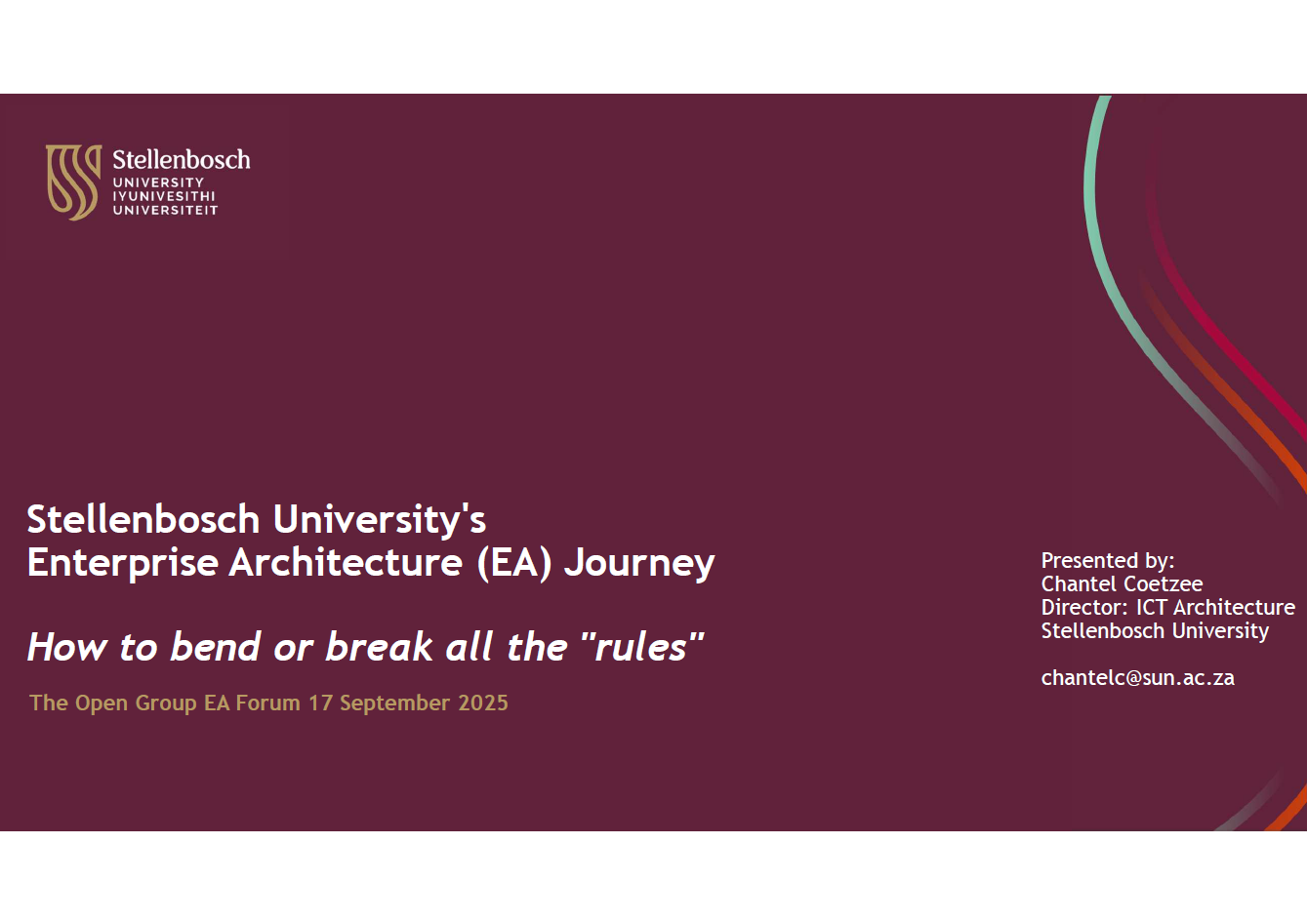
Enterprise Architecture: How to Bend or Break all the “Rules”
Chantel Coetzee talks about how they have defined their EA practice at Stellenbosch University and are actively maturing the discipline and ICT landscape by creating harmony of various disciplines in a simplified ADM.
An Introduction to the Architecture Forum
At this month’s EA Forum, Andrew Davies, Architecture Forum Director at The Open Group, will present an introduction to The Open Group Architecture Forum. Andrew will take you through the Forum structure, its standards, the Working Groups and their current activities, and the Forum's alignment with the ArchiMate Forum. You will find out how you can get involved with areas of interest and learn what tools are used by the members working on standards and related content. There will also be a brief overview of the TOGAF Standard, its structure, and how you can access the Standard’s content.

How Business Process Management Transforms Strategy into Value
In today’s complex business landscape, organisations often struggle to translate strategy into execution. A strong BPM capability ensures that business processes are not just optimised, but seamlessly integrated into the broader architecture framework, enabling agility, efficiency, and long-term success.
How BIAN is Shaping Standard Bank’s Architecture Landscape
The Banking Industry Architecture Network (BIAN) is a global, open framework that standardises banking architecture to drive interoperability, efficiency, and agility in financial services. At this month’s EA Forum, Rizwana Cassim, Enterprise Architect at Standard Bank Group, will share insights into how BIAN is shaping Standard Bank’s architecture landscape. Head of Enterprise Architecture for Corporate Functions, Tony Maimane, will present his thesis on the opportunities and challenges of BIAN adoption, using Standard Bank as a reference.
Is Dark Data Killing The Planet? EA as a Sustainability Strategy to Address Digital Decarbonisation
With an ever-growing digital carbon footprint, addressing “dark data”—unused data that consumes resources without adding value—is crucial for sustainability. Enterprise Architecture (EA) offers a powerful approach to managing dark data sustainably, helping organisations minimise waste and reduce environmental impact. Prof. Hanlie Smuts explores how EA practices can redefine data management, strengthen data governance, and promote energy-efficient operations.
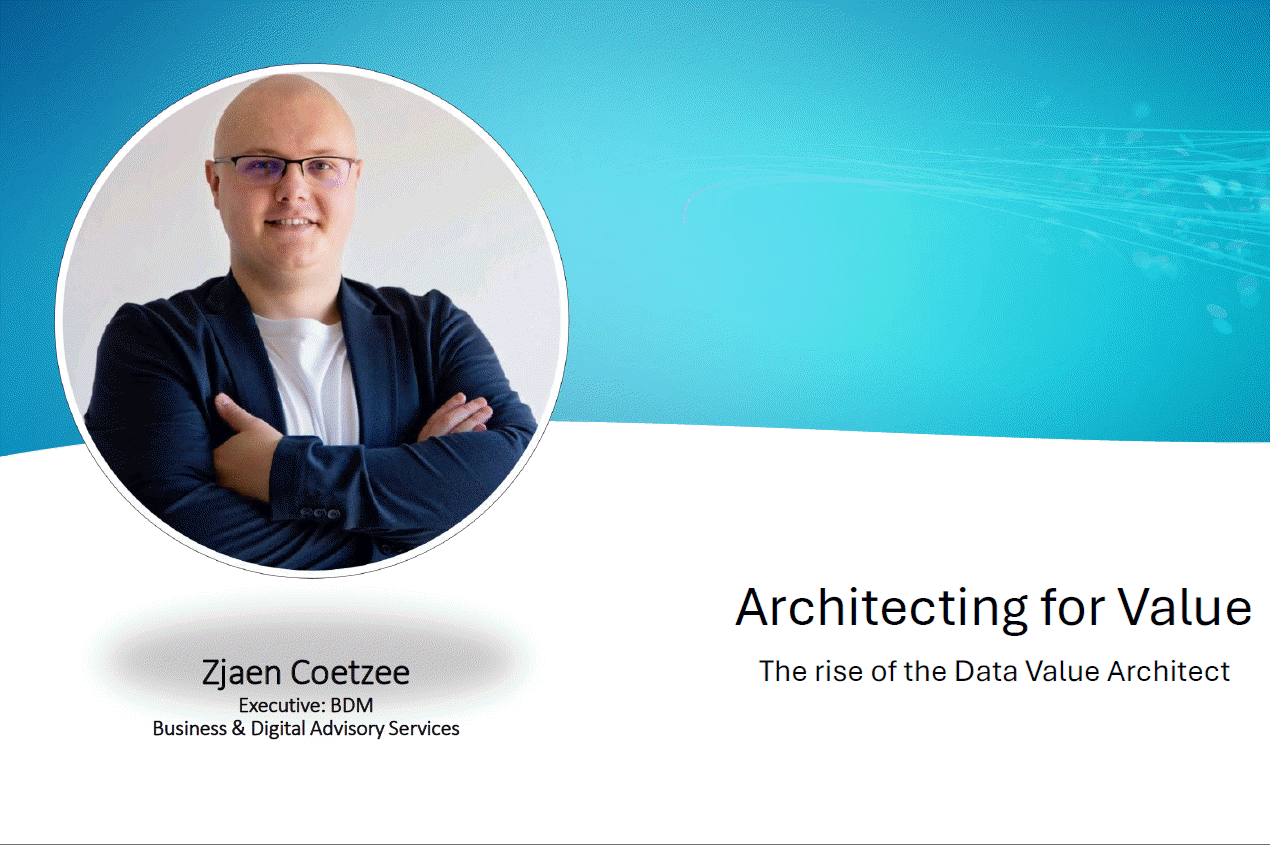
Data Architecture for Business Value
Traditional approaches to Enterprise and Data Architecture often focus on business and IT issues, but fail to address the critical component of value creation. Zjaen Coetzee's presentation shifts the conversation towards how Data Architecture can directly drive business value. It examines leading practices in Data Architecture, as well as the gaps and challenges that many organisations face when trying to unlock value from their data. A key highlight is the introduction of a new role—the Data Value Architect—which goes beyond traditional data management to focus on delivering value as a key outcome of architecting the data landscape.
Capability Maturity - A Global Perspective
EA Maturity Assessments take a close look at how well an organisation manages its enterprise architecture processes, skills, tools, and artefacts. They highlight what’s working and what needs fixing, helping to align EA and IT with business goals and prioritise the delivery of future EA initiatives - leading to smarter decisions and more capable architectures.
Artificial Intelligence (AI) in Higher Education Institutions
Francois Wolmarans' presentation looks at the transformative potential of Artificial Intelligence (AI) within higher education institutions. He explores both the challenges and opportunities of AI integration, focusing on strategic considerations necessary for its implementation and use. Topics include AI research at the university using Language Learning Models (LLMs) for student support while addressing ethics and transparency, leveraging open-source LLM tools, and securing AI systems within university environments.
The Role of Business Processes in Digital Transformation
Anneke Thorburn discusses how integrating technology across all business aspects requires rethinking business models and processes upfront. This means changing how the business operates, then making sure that clean, quality data is identified and available, and then changing the technologies.
Practicing EA - Personal JOURNEY
Boitumelo Molete, Senior Manager EA at The University of Witwatersrand will draw on her work at the university to discuss her Enterprise Architecture (EA) journey within an educational context. The presentation will include tips on using EA to manage challenges both unique to the practice and to the industry while offering insight into the transformative potential of EA within higher education and other sectors.
TOGAF 10th Edition
Stuart Macgregor's presentation is an overview of the new TOGAF Standard 10th Edition. It focuses on some key aspects, including the new structure of the standard: the Core Standard and the TOGAF Series Guides, as well as the extension of the certification programme. In addition, the presentation looks at the significant updates and enhancements in the 10th Edition and their relevance to us in Africa
Why is Data Integration so Difficult?
Dr Chris Harding explores the data integration context including why data is integrated, what kind of data is integrated, and he looks at the pain points and issues. In addition, Chis reviews the developments in data integration practices and technology, including Data Virtualisation, Data Fabric, Data Mesh, and Data Platforms.
As part of this presentation, Chris also touches on how The Open Group standards; TOGAF, the O-AA (Open Agile Architecture), and the DPBok (Digital Practitioners’ Body of Knowledge) can help and support architects engaged in data integration projects.
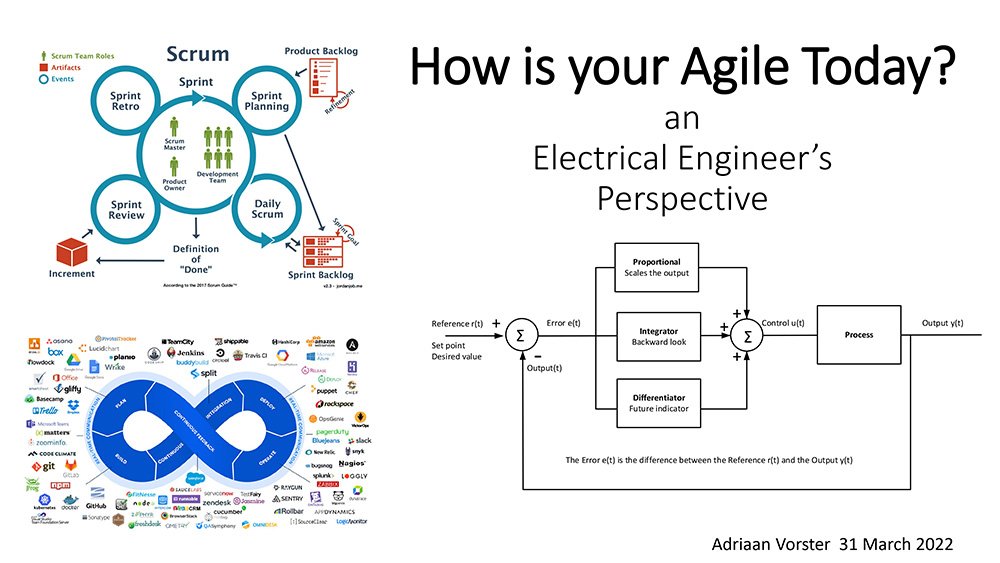
How Is Your Agile Today?
In a world where Agile has been elevated to the Ultimate Silver Bullet, with world-leading consultancies establishing Agile consulting teams, Adriaan Vorster takes a slightly irreverent look at what Agile is all about (and what it is not).
By investigating the Agile environment from a Control Systems perspective Adriaan Vorster will attempt to pare concepts to the bone and propose a way of managing complex environments with significant uncertainty by using a simple rule-based approach.
The Open Group 25th Anniversary Global Virtual Event
As The Open Group South Africa, participated in the The Open Group 25th Anniversary Global Virtual Event on 27 October 2021.
This was a celebration of 25 years of the open digital standards produced by The Open Group. The event was hosted in different parts of the world including Shanghai, Mumbai, London, Sao Paulo, San Francisco, Tokyo, Boston and Johannesburg.
Architecture Blueprint for a Global Company Merger
In his presentation, Mark van Bavel, Executive Vice President, Digital Platform Architecture at NTT Limited, will describe how Enterprise Architecture was used to formulate the strategy to both integrate and transform the organisation. Their strategy was to enable the integration, consolidation and digital transformation of the entire organisation. Mark will include details of the architecture approach, technology strategy, blueprint, methodology and tools they used.